
Paintings that are heavily inspired by my poetry, womanhood, nature and spirituality.
Paintings that are heavily inspired by my poetry, womanhood, nature and spirituality.

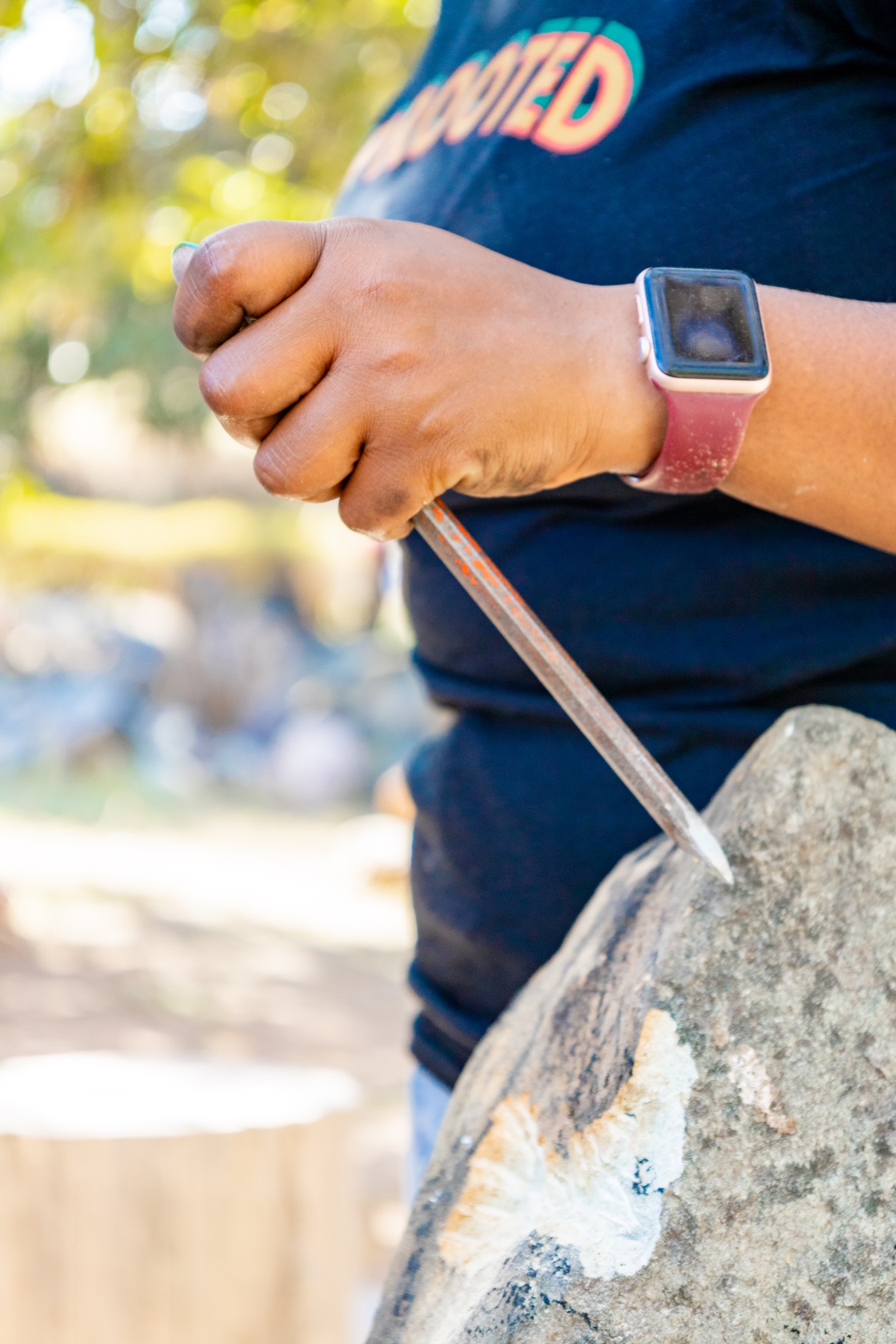
I had the privilege of attending a Shona sculpture workshop with Zimbabwean master sculptor Brian Nyanhongo, right here in the UK, in the beautiful town of Great Malvern in August 2025. Thereafter, I attended a 10 day intensive residency with his sister, world-renowned Zimbabwean sculptor Agnes Nyanhongo in Harare, Zimbabwe, in October 2025. In this blog, I’m going to share my journey of becoming a stone sculptor!
I never imagined I’d spend the end of summer chiselling away at a block of stone, but here we are…
Earlier this year, while researching MFA Fine Art programmes, I realised that any postgraduate study I pursued needed to be rooted in an art form uniquely connected to my identity. This is what led me to Shona stone sculpture, a tradition originating in Great Zimbabwe, and one that resonates deeply with my ancestral memory and sense of belonging.
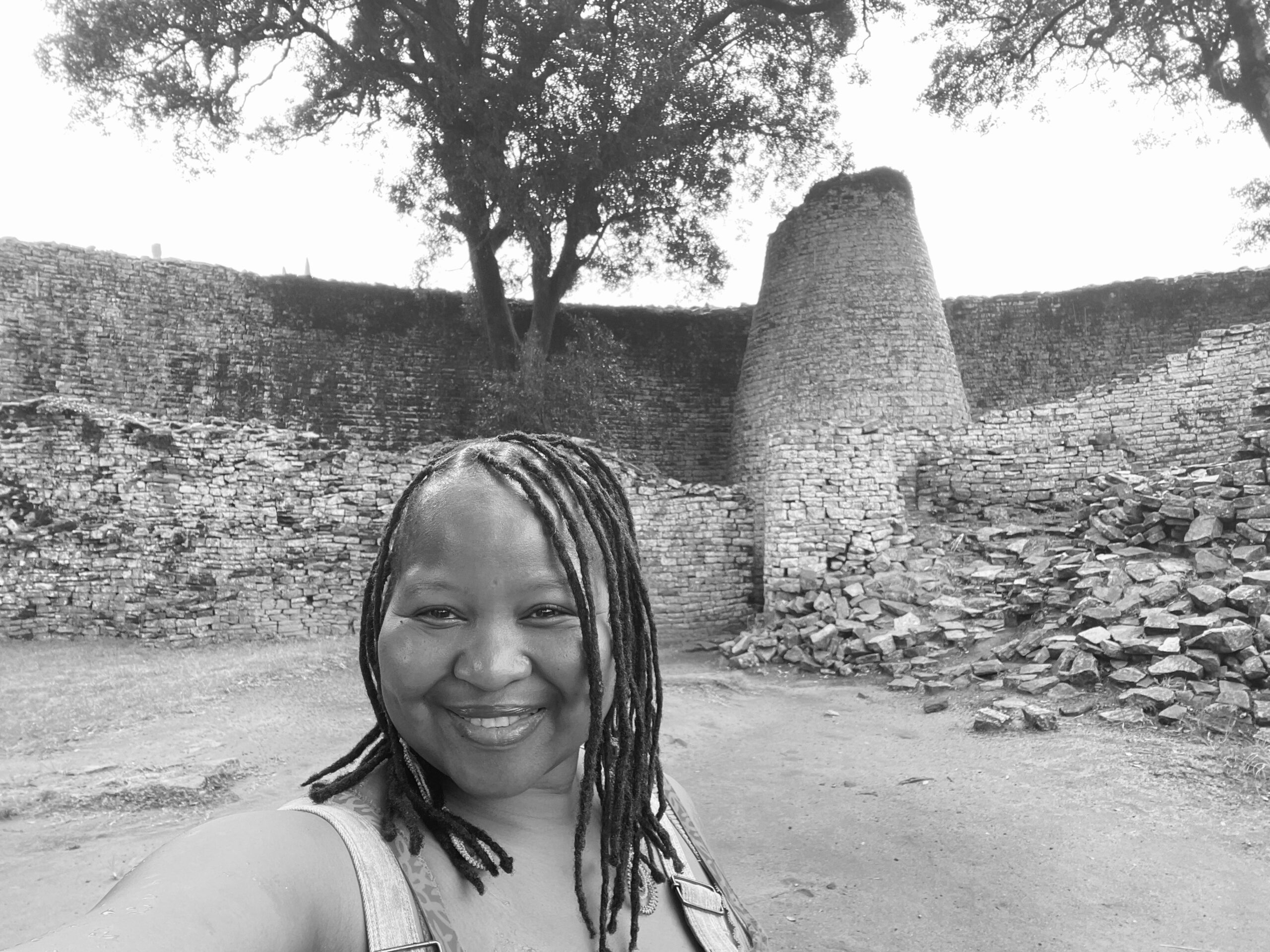
My decision to pursue this art form was made easier by the fact that I’m a collector of Zimbabwean sculptures myself, and have always been in awe of it. The love of sculpture rubbed on to me from my father who was also a collector of both stone and wood sculptures.
As I was searching online for local sculptor-teachers, by synchronicity (because I don’t believe in coincidences!), Zimbabwean sculptor Brian Nyanhongo, happened to be teaching stone sculpture in Great Malvern, about an hour’s drive from my home in South Wales. I resolved that a two-day workshop was long enough to inform me whether I’d enjoy the art form on a long term basis.
Brian is the son of first generation master, Claud Nyanhongo, and one of nineteen children, of whom nine are sculptors! Read more about Brian here.
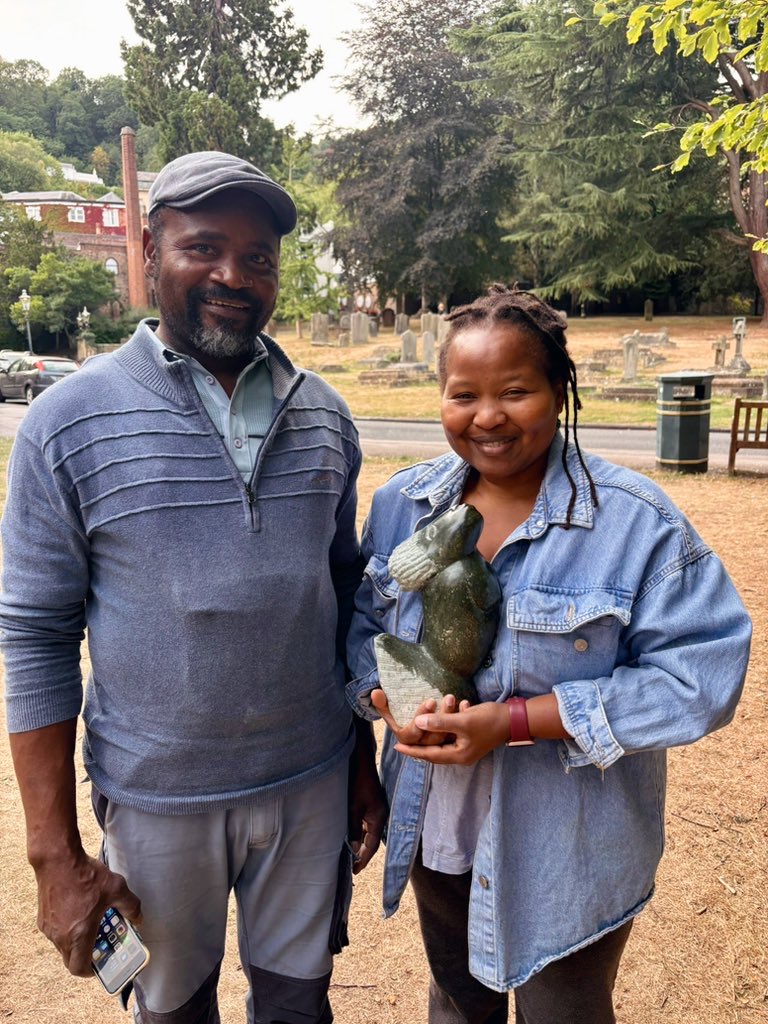
On Day 1 with Brian, I was introduced to the stone that would become my companion for this journey: a piece of serpentine rock, specially brought from Zimbabwe. I like to think I didn’t choose it…it chose me! There was something grounding and mysterious about holding it, knowing it carried with it not only millions of years of Earth’s history but also a cultural lineage of Shona sculpture, a tradition rich with symbolism and storytelling. Instinctively, I knew what I wanted to carve: a mermaid, whom I named Masiziva.
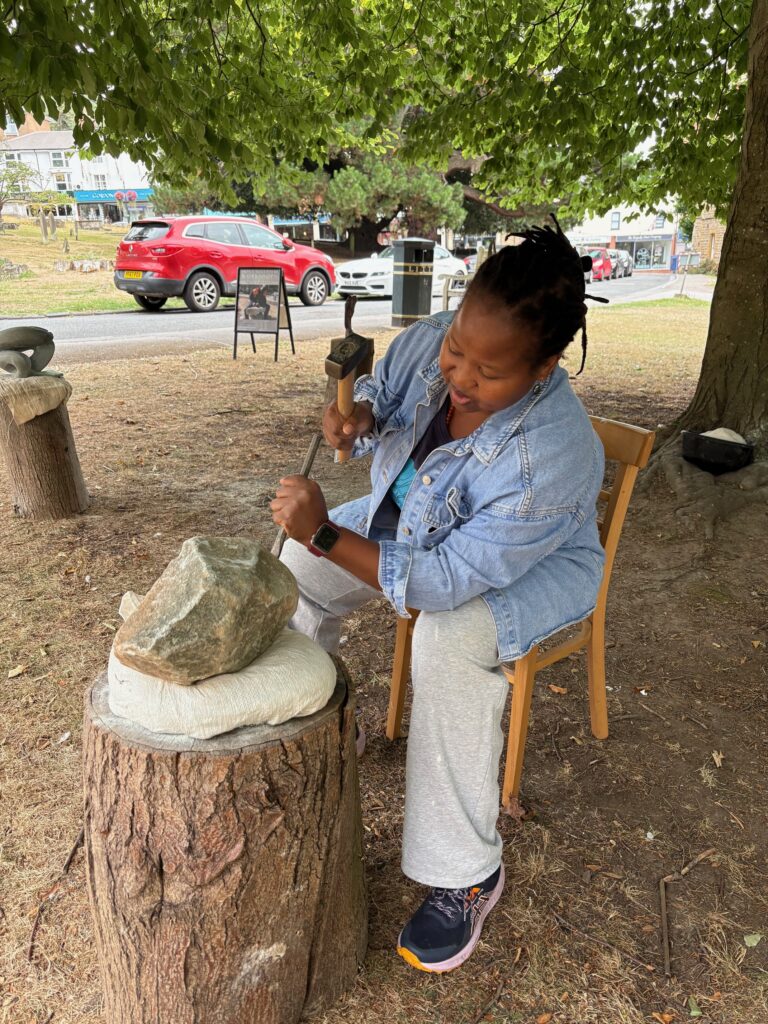

The process of chiselling into stone for hours on end was both exhausting and unexpectedly meditative. It reminded me of painting: the rhythm, the repetition, the patience required. Every strike of the hammer against the chisel became a dialogue with the stone. Slowly, form began to emerge, and with that, a deep sense of satisfaction.
Sculpting is not glamorous, and it’s certainly not for those after a soft life. There’s dust everywhere, and your arms ache by the end of the day, but there’s something profoundly humbling about shaping stone. It requires stamina, focus and trust that the piece is waiting to reveal itself.
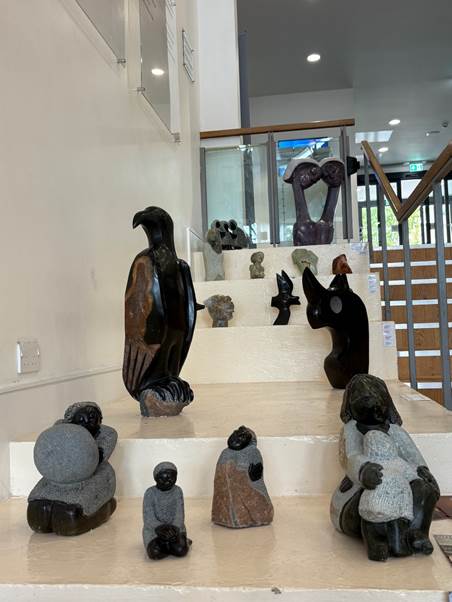
As part of this experience, I also had the chance to wander through Brian Nyanhongo’s stunning exhibition at The Malvern Theatre. His sculptures carry such presence, combining elegance and strength, intimacy and universality. My favourite piece was “Shy Girl”. To see the master’s work while trying my own hand at the craft was both inspiring and grounding.
And then there was the setting itself: working outdoors in Great Malvern, surrounded by lush landscapes and fresh air, only amplified the joy of the experience. There was not much time to wander (and I will have to go back to do the tourist bit!) but it was clear to see that Great Malvern features several charming points of interest, including its historic parish church – Great Malvern Priory, known for its impressive medieval architecture and beautifully preserved stained-glass windows. We did our classes near the churchyard so we were able to admire its beauty without having to leave our seats. Scattered around the town are distinctive sculptures that celebrate Malvern’s artistic heritage and add character to its streets and gardens. Visitors also enjoy the elegant spring-water fountains, which showcase the area’s famous natural springs and offer a refreshing connection to Malvern’s spa-town past.
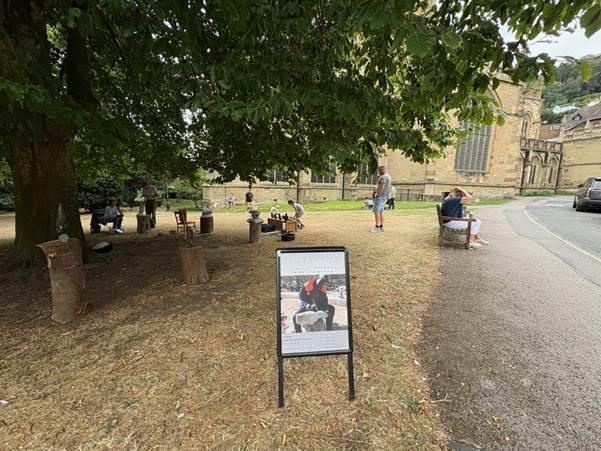
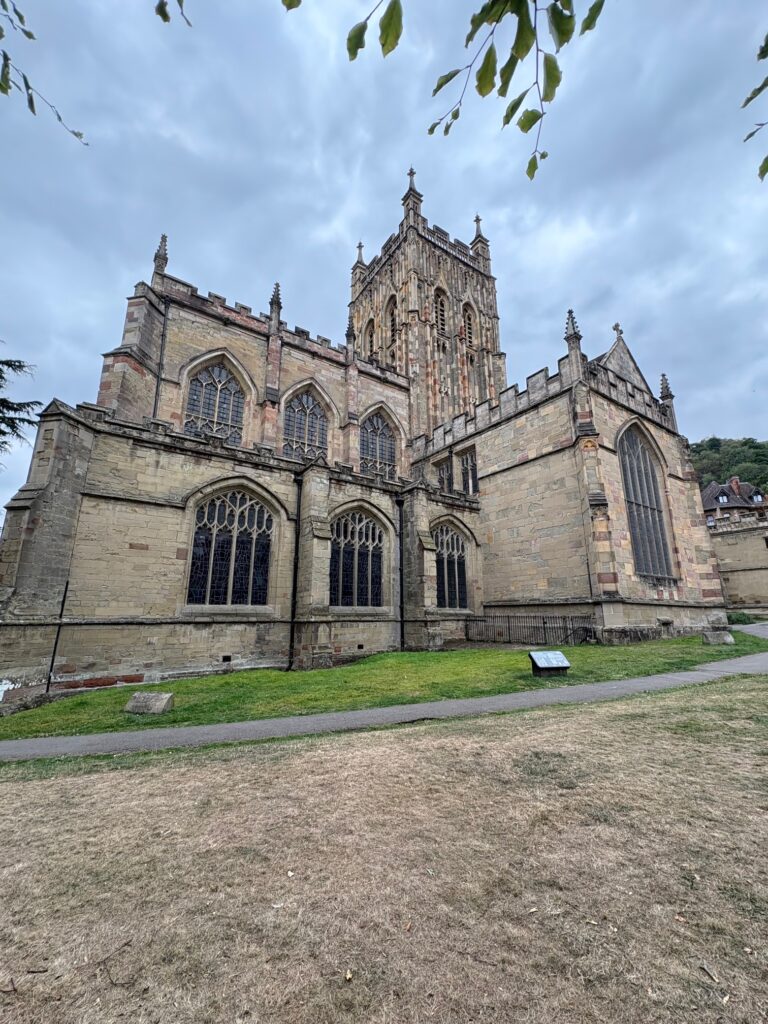
By Day 2, my mermaid had begun to take shape. I spent the day rasping, sanding and polishing Masiziva. Looking at the finished piece, I felt a rush of pride, not because it was perfect (far from it!), but because it marked the beginning of something new for me. Another art form, another way of telling stories, another medium to explore. This was only the beginning of my stone-carving journey, but it already felt like a new chapter in my creative life.
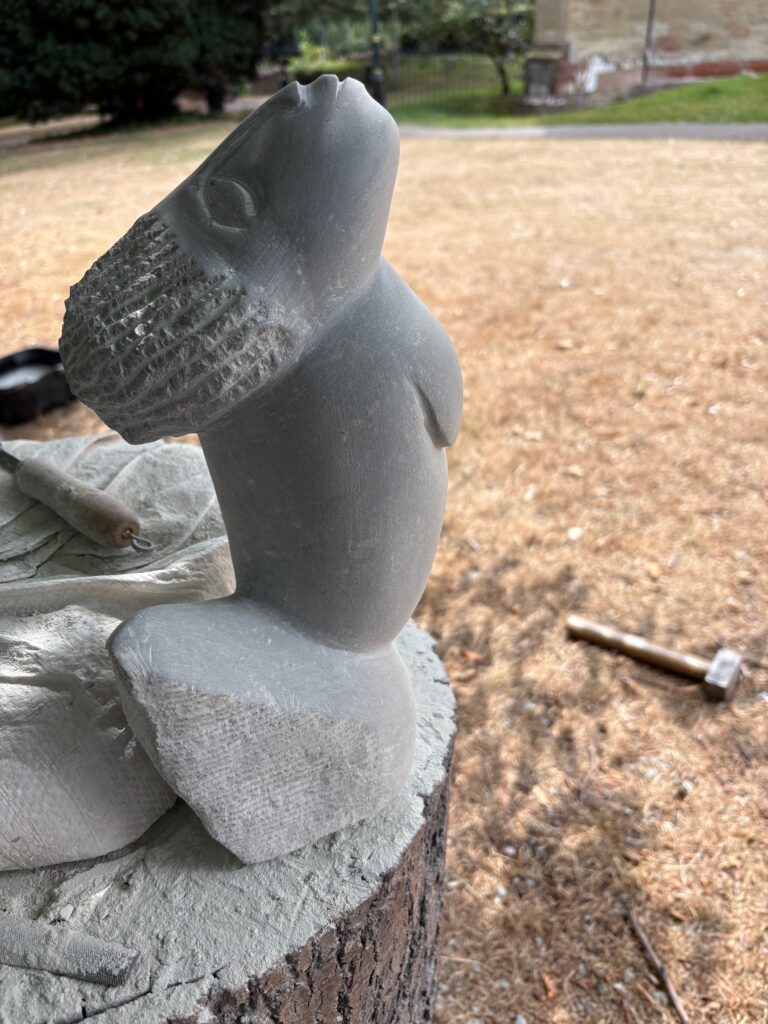
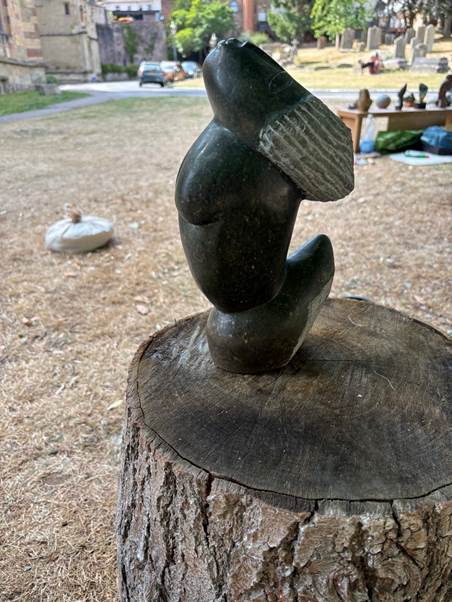
None of this would have been possible without the guidance of Brian Nyanhongo. His generosity as a teacher, his patience, and his deep well of knowledge made the process so much more meaningful. It’s not every day that you get to learn directly from a master sculptor who carries the legacy of Zimbabwean Shona art into the present. To top things off, he was so impressed by my work as a beginner, when I told him I wanted to continue learning, he organised a sculpting residency with his sister, Agnes.
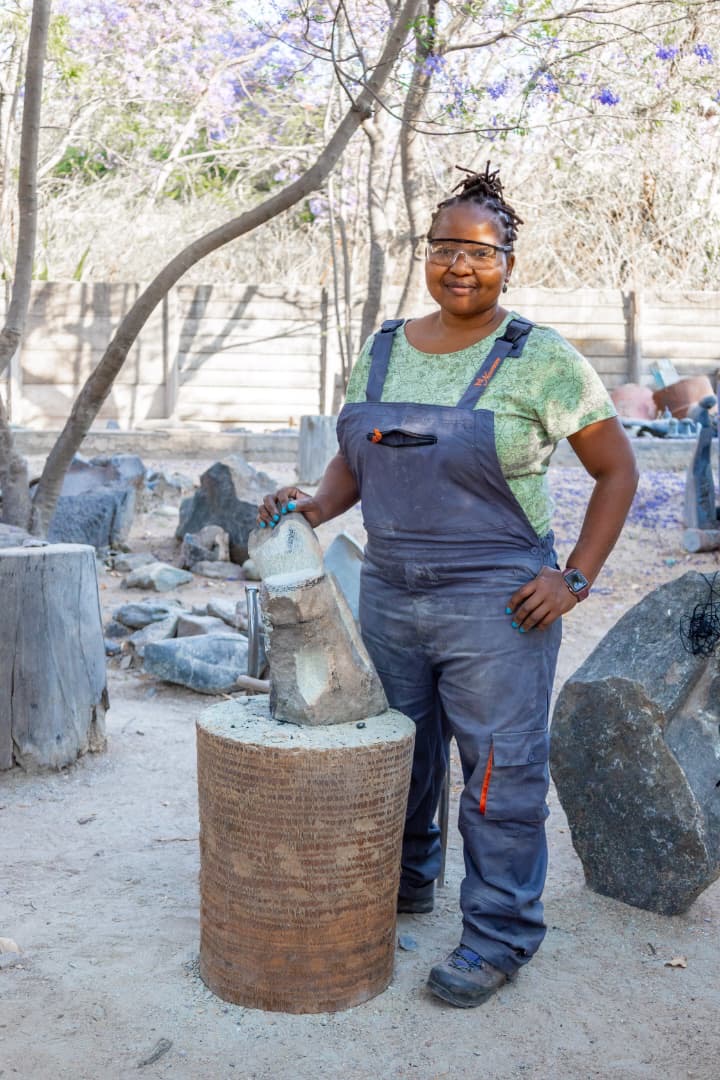
In October 2025, I embarked on a 10-day stone sculpting residency under the mentorship of renowned Zimbabwean sculptor Agnes Nyanhongo. What began as an artistic experiment quickly became a deeply personal journey; one that reconnected me with my ancestry, my storytelling roots, and the quiet wisdom of stone.
Agnes is one of the most successful Zimbabwean sculptors, and one of Africa’s most collected woman artists. Agnes works extensively with the human form, often specifically addressing women issues, but always expressing a calm and watchful strength that seems so true to her own personality. Read more about Agnes here.
The residency began with a visit to Agnes Nyanhongo’s studio, where I saw her powerful works alongside those of her father and siblings. Being in that space filled me with awe and gratitude; a feeling that stayed with me throughout.

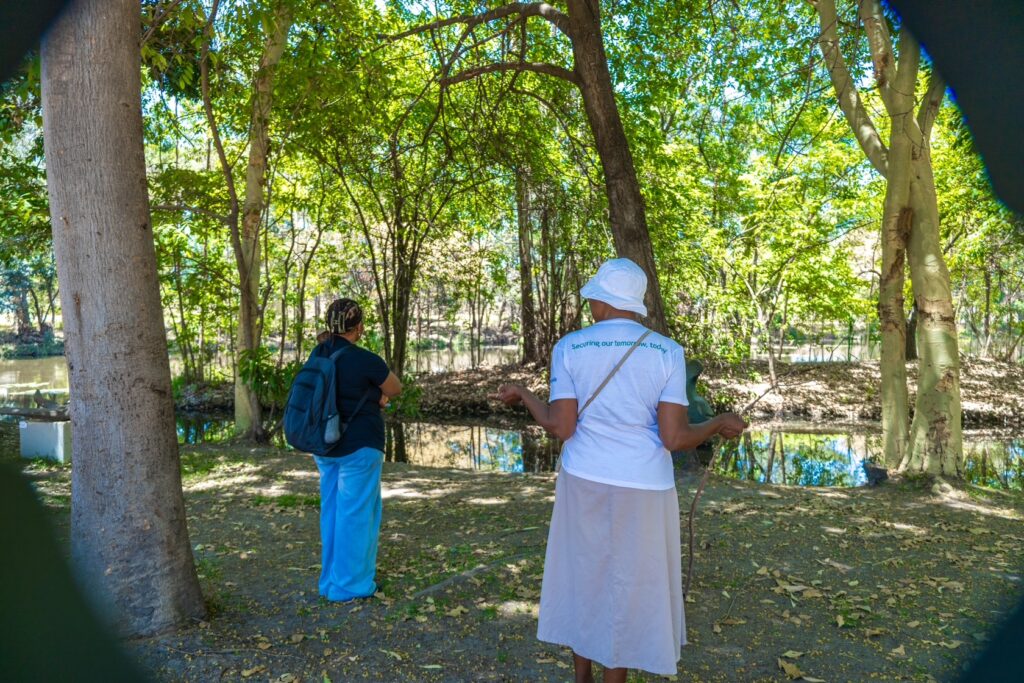
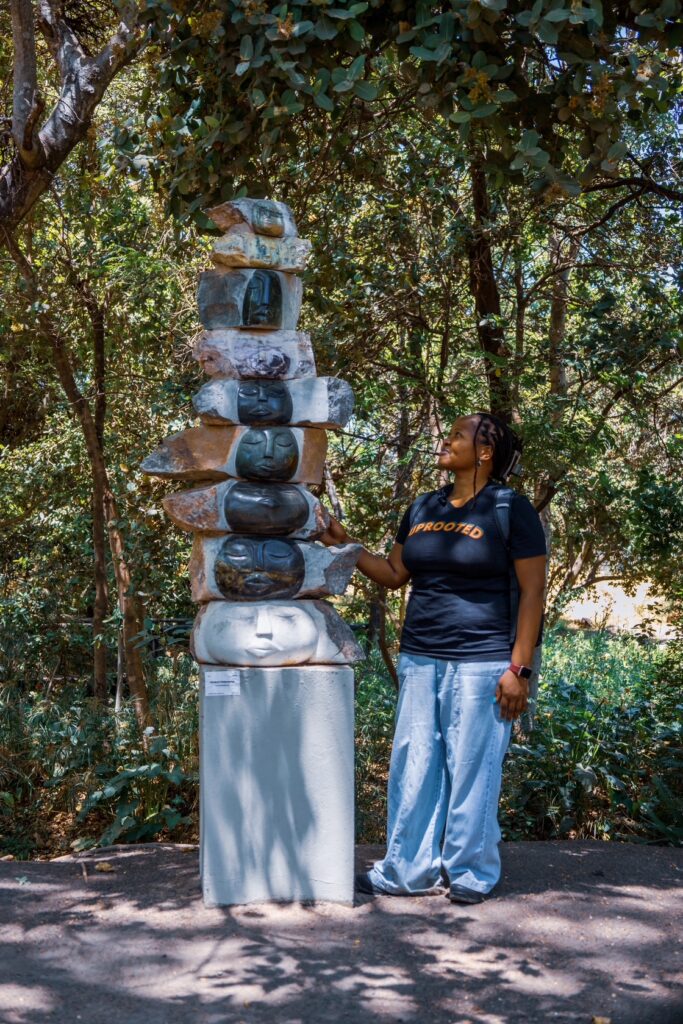
We then visited Chapungu Sculpture Park, exploring the history of Zimbabwean stone sculpture and viewing pieces by first-generation sculptors who laid the foundations for this world-renowned art form. We had discussed Chapungu Sculpture Park in great detail with Brian, particularly his involvement in the curation of the gallery, and experiencing the space whose history I’d heard so much about, felt incredibly joyous.


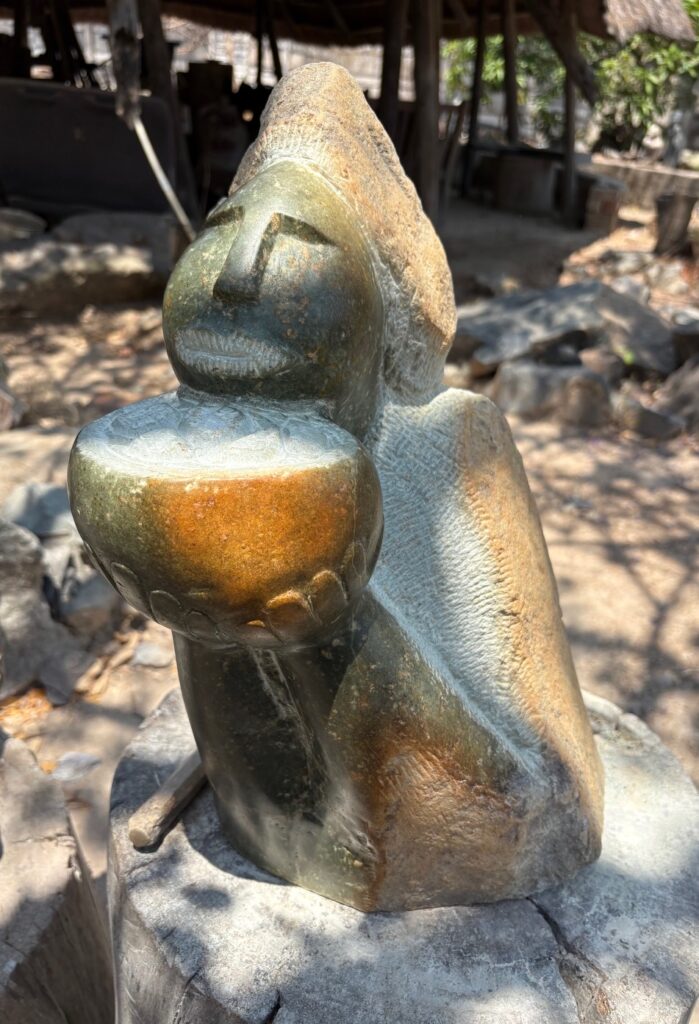
In the afternoon, after safety briefings and a refresher on tools and materials, I sketched my ideas and discussed feasibility with Agnes. Together, we created reference photos and I began carving my first piece: Chembere yokwaChivi yakabika mabgwe ikamwa muto (The elderly woman of Chivi who cooked stones and drank the broth.)


I’m going to take this opportunity to digress and give you some background to the artworks I produced during my residency:
Shandurai, daughter of Zengeya of the Fish Totem, was a princess of the Ngowa clan in Chivi. Her beauty captured the heart of Tavengwei, son of Mudzungairi of the Lion Totem clan. To win her hand, Zengeya demanded an unusual bride price… a live warthog!
After marriage, Shandurai became known as VaChifedza, celebrated for her nurturing spirit. She was called VaChifedza vezamo guru because of her generosity and her large breasts, which fed and healed the children of her village. Oral tradition tells how she could even cast a breast over her shoulder to nurse her own children.
VaChifedza is also remembered in the Shona proverb, “Zviro zviedzwa, chembere yokwaChivi yakabika mabgwe ikamwa muto.” (which stresses the importance of trying new things: “Things are proven by trying, like the elderly woman of Chivi who cooked stones and drank their broth”). During a drought, she is said to have cooked stones to comfort her hungry children, tricking them into believing food was coming. In their relief, they fell asleep and survived that night of hunger.
Her brother, Kuvhirimara, later migrated to Mazvihwa, and I am a direct descendant of his lineage.
I spent the second day in the workshop, rough-shaping the form of my first piece. Whenever I needed direction, I revisited Agnes’s sculptures, each one a masterclass in patience and storytelling.
Did you know her work is part of the permanent exhibition Zimbabwe Sculpture: A Tradition in Stone at Hartsfield-Jackson Atlanta International Airport? Her pieces are also in the collections of Oprah Winfrey and Maya Angelou, a testament to her global impact and timeless artistry.

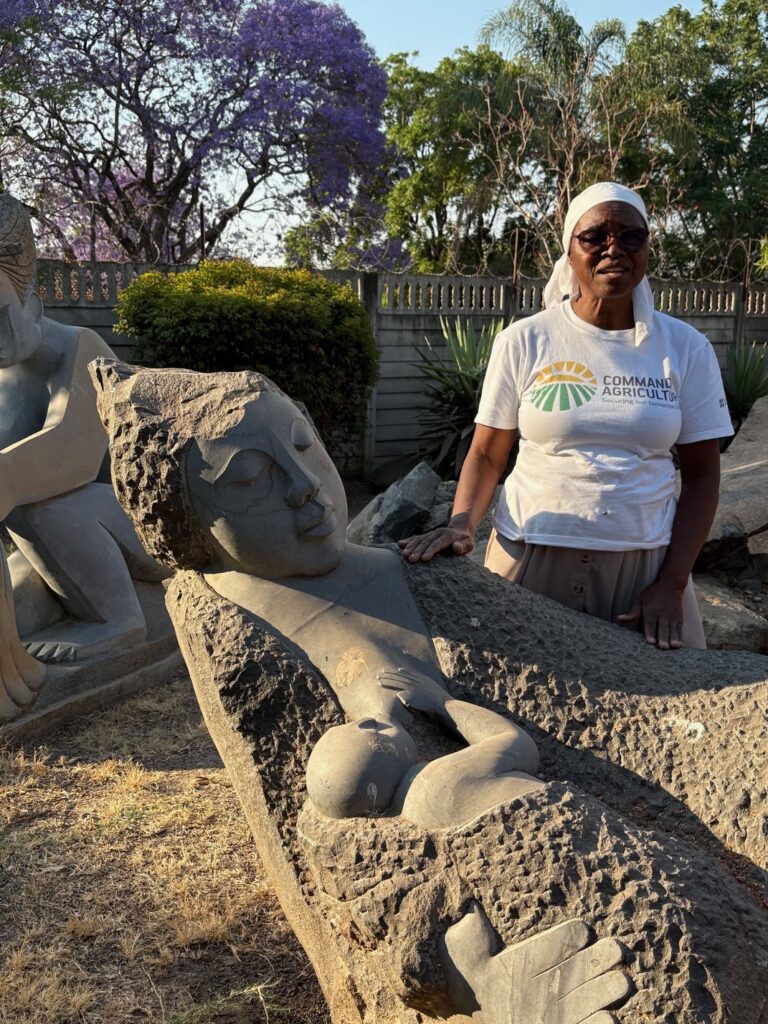
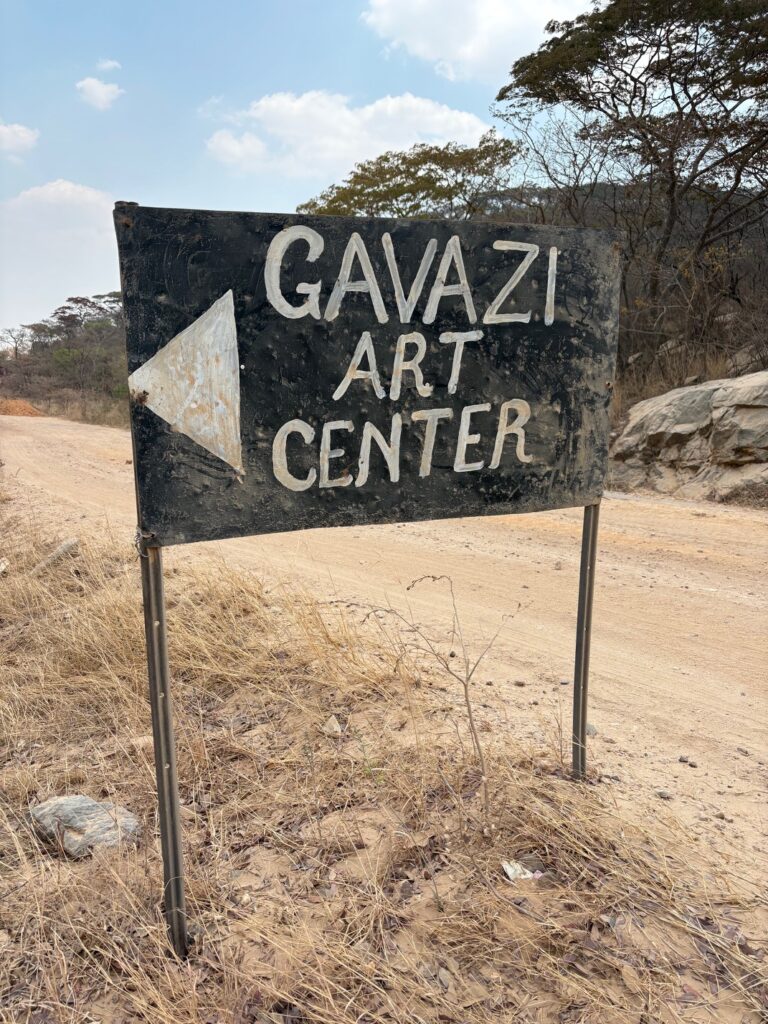
Day 3 took me beyond the studio and into the heart of Zimbabwe’s landscape. With Dennis Nyanhongo (Agnes’s brother and a sculptor himself) at the wheel, we travelled to Mvurwi, visiting the Gavazi Art Centre to see where springstone is mined.

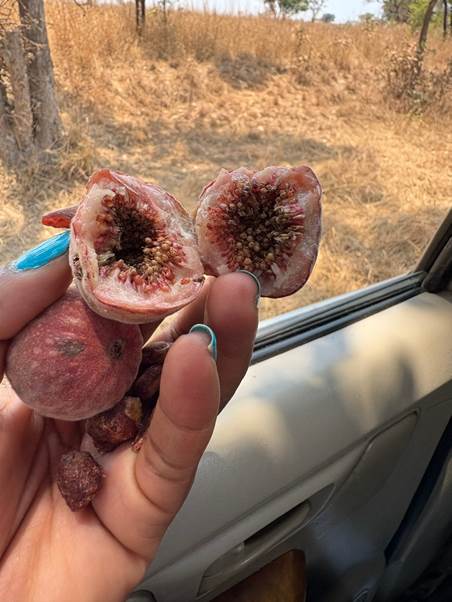
The Great Dyke stretched across the horizon, ancient, powerful, grounding. From there we continued to Chiweshe, to a site called Jengamvura, home of the opal stone. Along the way we stopped to enjoy indigenous fruit that was in season.
In both quarries, I learned how to read raw stones and selected a few to bring back to the studio. I was fascinated to see that some artists carve directly at the source, leaving behind unfinished sculptures, silent and beautiful among the rocks. Hiking those hills under the sun was hard work, but the views were worth every step.

Back in the studio, I refined the form of my first sculpture. Each strike of the chisel brought me closer to the story I wanted the stone to tell… a story of endurance, faith and maternal love.

Day 5 was spent visiting Airport Road Art Centre and Chitungwiza Art Centre in Harare.
At Airport Road, I was amazed by the creativity and generosity of the sculptors, who openly shared their processes. Clemencia Ncube was the only woman present and her story of perseverance in a male-dominated field was inspiring. My highlight was meeting Washington Madamombe, son of the late, great Colleen Madamombe. He spoke of how his mother became the first woman sculptor to work at Chapungu Sculpture Park at a time when women were not permitted there due to the physically demanding nature of stone sculpting.
At Chitungwiza Art Centre, I was moved by the scale and diversity of talent. Unexpectedly, I met Onai Mushava, fellow writer and journalist who also sculpts – he recognised me from social media! I met Chango Chitoko, a gifted woman sculptor, and 15-year-old Golden Fombe, from whom I bought a small tortoise sculpture, a humble but meaningful reminder of the next generation of artists.
Day 6 was spent perfecting my first piece under Agnes’s watchful guidance. Between sanding and shaping, we also chatted about my upcoming debut exhibition, Nzwisa. Her advice on preparation, presentation and emotional readiness for showing new work was invaluable.
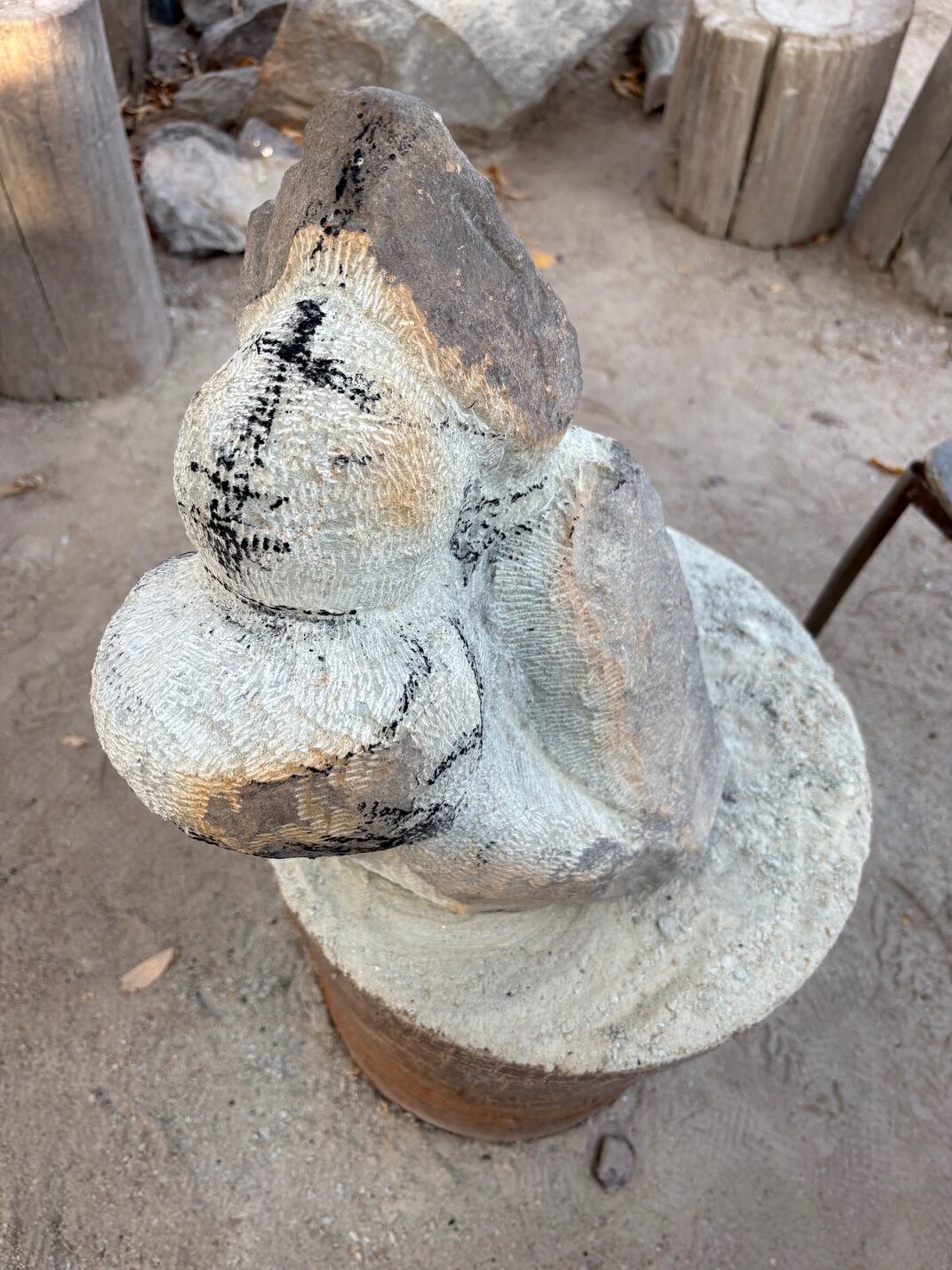
Day 7 was all about focus. I spent the entire day in the studio working alongside Agnes, who continued to challenge and guide me with quiet precision.
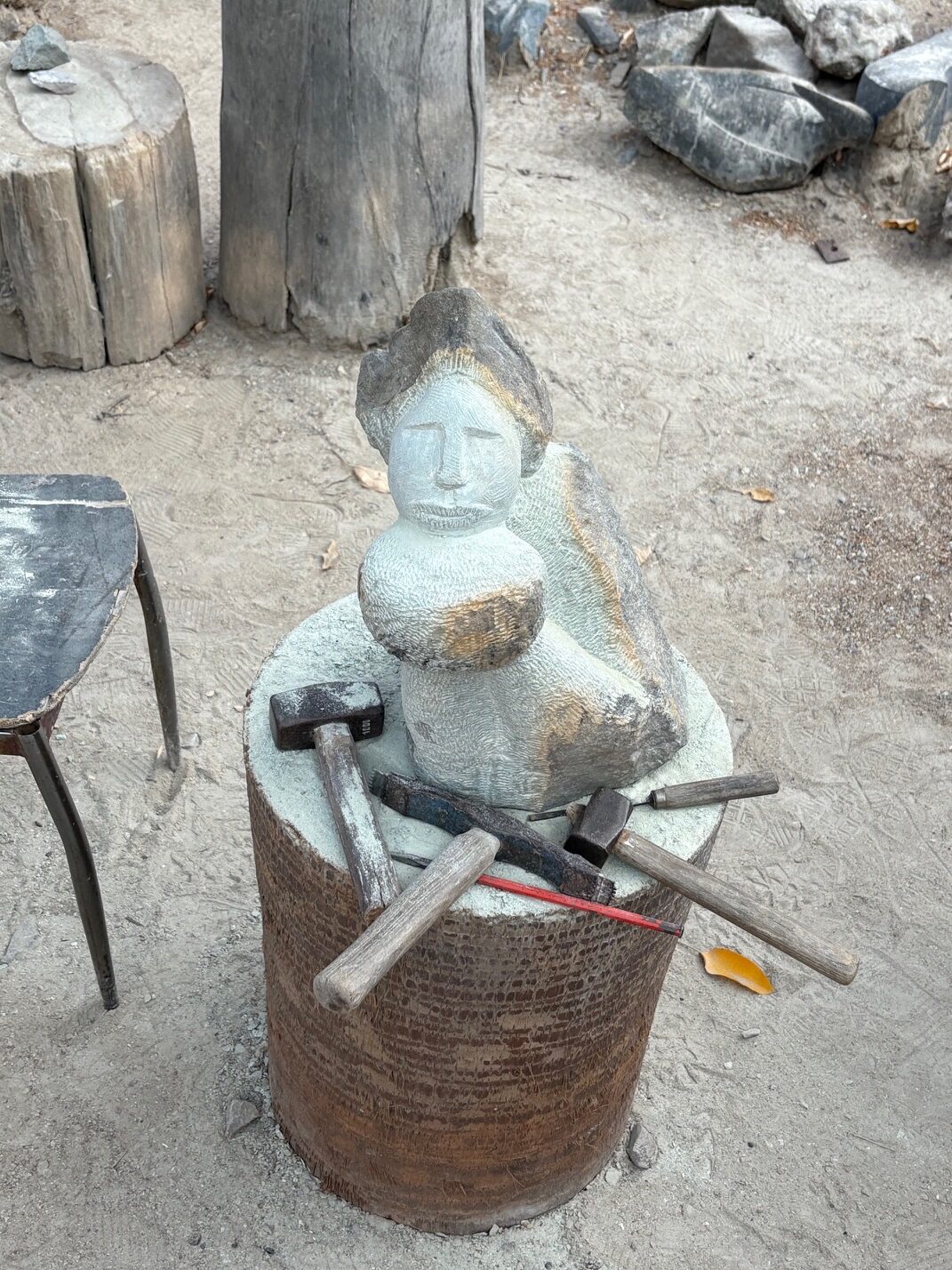
By Day 8, my first piece, Chembere yokwaChivi yakabika mabgwe ikamwa muto was fully formed. The plan was to polish it on the final day, so after sanding it several times, I left it to breathe and enjoy the sunshine. I then began shaping my second piece, VaChifedza vezamo guru, inspired by my ancestor VaChifedza, known in oral history for her nurturing and healing spirit.
With only two days left, I knew I wouldn’t finish the second piece before the end of the residency, but I was determined to get it ready enough to exhibit alongside the first piece at Nzwisa, opening on 17 October.
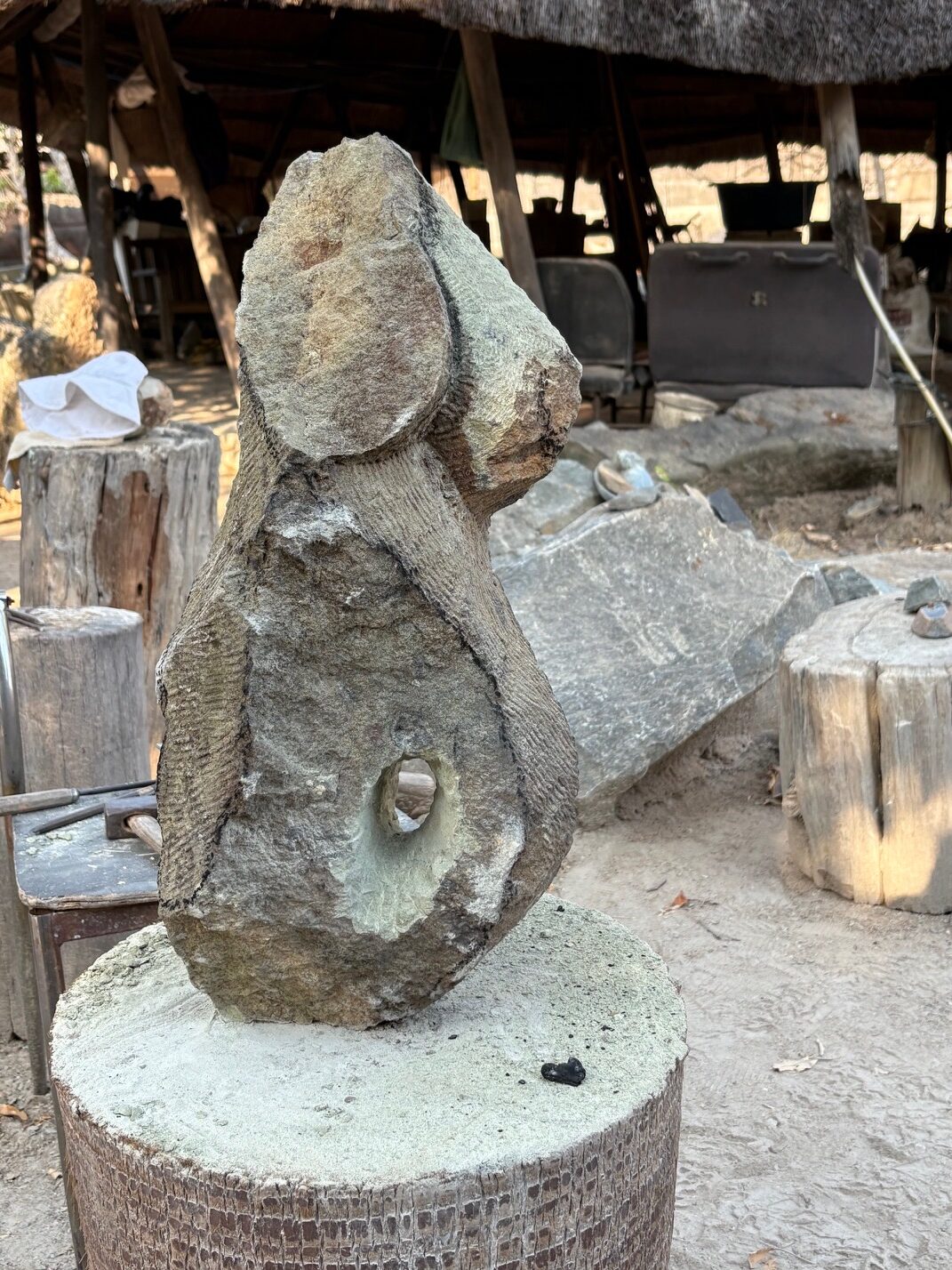
Day 9 was a day of patience and touch. I began by inspecting my first sculpture for imperfect spots, then I sanded it again in readiness for polishing, feeling the stone slowly come alive under my hands.
I also continued shaping VaChifedza vezamo guru, forming the breast that gives the piece its name… a symbol of nurture, strength and remembrance. With every curve and contour, I felt the presence of my ancestors guiding me.
The final day was bittersweet. My first piece, Chembere yokwaChivi yakabika mabgwe ikamwa muto, was polished and complete; my second, VaChifedza vezamo guru, was filed and prepared for display. I was exhausted, but proud beyond words of what I had achieved in just two weeks.
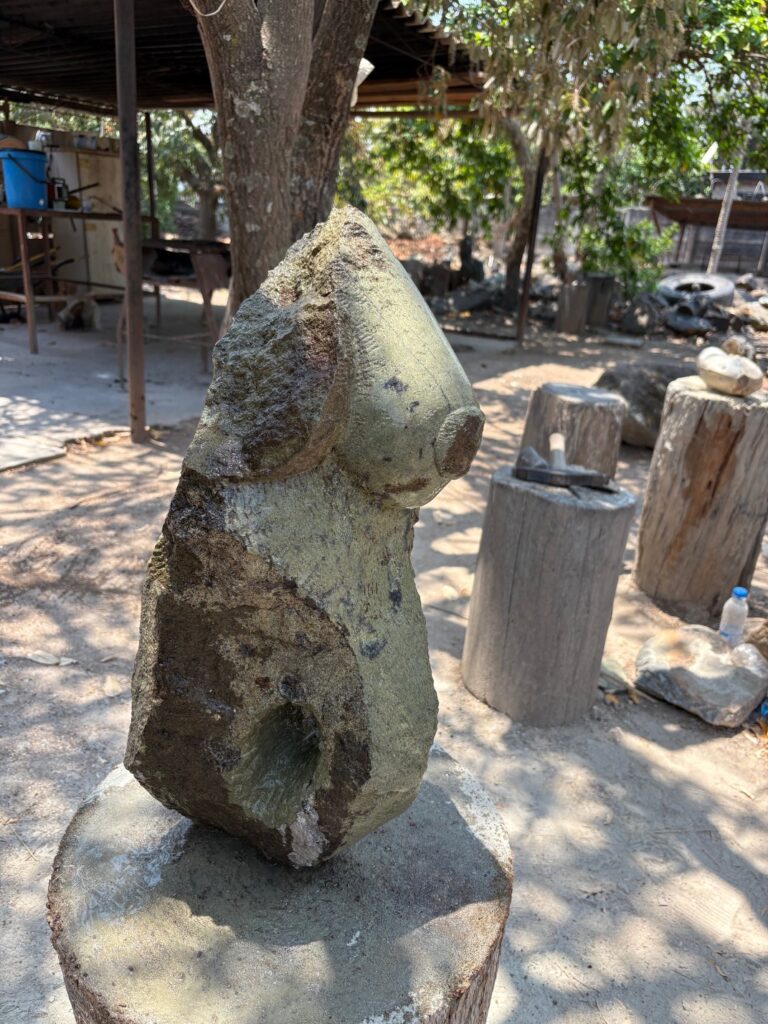
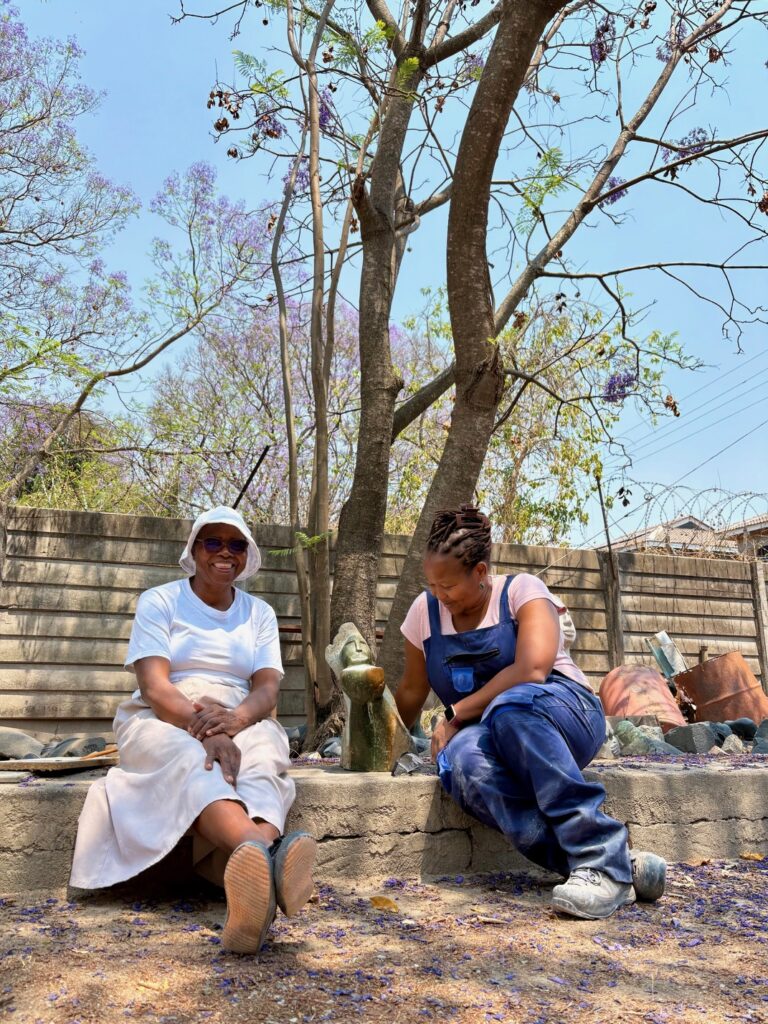

I said goodbye to Agnes with deep gratitude and satisfaction. Later that night, at the opening of my debut solo exhibition, Nzwisa, Agnes looked at VaChifedza vezamo guru and said:
“Now that I’m looking at her displayed on the plinth, she looks complete!”
A few guests shared the same sentiment, and in that moment I knew my journey had come full circle. I can’t begin to express how proud I am of what I accomplished.
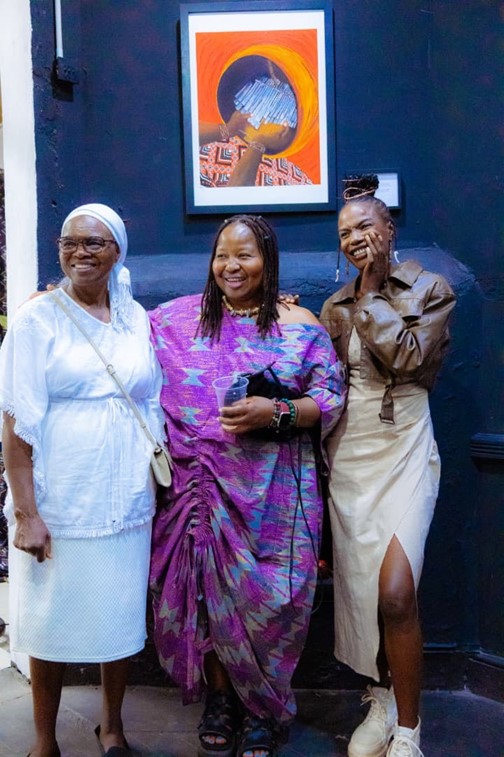
This residency was more than an artistic opportunity; it was an act of remembering. Through Chembere yokwaChivi yakabika mabgwe ikamwa muto and VaChifedza vezamo guru, I found a way to honour my ancestral stories and the women who carried strength, healing and creativity in their hands.
Working under Agnes Nyanhongo taught me not only the techniques of stone sculpture but also the grace of patience and the discipline of listening… to the stone, to the story and to myself. I left the residency not just with two sculptures, but with a renewed sense of purpose. The stone had spoken.
***

Huge love and gratitude to my photographer, Talent Gwete a.ka. Photographer Wenyu, who showed up daily and travelled with us to document my residency. Watch the full documentary, Cooking Stones below:
